
The mechanical seal of BB2 pump in a 500-ton chemical plant in Anhui frequently failed. This is a field case after Hafar changed P11+53 to P74
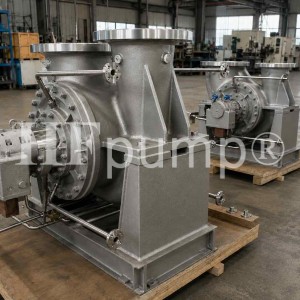
2026-06-29 21:22:53 723 江苏海珐A BB2 Pump in a 500-strong Chemical Plant in Anhui Q:886m³/h H:37m ρ:0.848g/cm³ μ:0.358Cp Ha:1m P:4KW Hr:1m Temperature 86° Medium: High-boiling benzene η:83% On-site case of frequent mechanical seal failure with PLAN 11+53B, and Haifa's switch to the P74 solution. In a continuous production unit at a 500-strong chemical enterprise in Anhui Province, a BB2-type API610 chemical process pump had long troubled on-site maintenance personnel. This pump originally used the P11+53 seal flush plan, which seemed adequate in configuration, but during actual operation, the mechanical seal frequently failed. The customer's on-site feedback was straightforward: the pump body itself had no major issues, bearing temperatures were basically normal, but the mechanical seal just wouldn't last. After a period, leakage would occur, requiring disassembly, inspection, and replacement. After receiving the on-site feedback, Jiangsu Haifa Machinery Manufacturing Co., Ltd. did not immediately suggest the customer replace the entire pump. For an API610 BB2, the pump body structure, rotor rigidity, bearing condition, mechanical seal, and flush plan form an integrated system. If the mechanical seal is repeatedly replaced without analyzing the seal chamber pressure, medium condition, flush fluid cleanliness, and auxiliary system stability, a new seal often only provides a temporary fix. 1. On-site Problem: Frequent Seal Failure with the P11+53 Plan This BB2 pump is used in a critical section of the chemical unit and operates continuously. The original system used the P11+53 plan: P11 draws the medium from the pump discharge as flush fluid into the seal chamber, and P53 provides barrier fluid to the double mechanical seal through an externally pressurized barrier fluid system. On paper, this plan is a common configuration, but in this specific operating condition, problems gradually emerged. First, the mechanical seal faces showed abnormal wear, with scoring and localized heat marks visible upon disassembly. Second, the seal fluid system required frequent maintenance, including regular fluid top-ups, venting, and pressure fluctuation checks. Third, there was a risk of slight crystallization, polymerization, or contamination in the medium; the process fluid drawn by P11 was not always sufficiently clean. Fourth, when the unit load was adjusted, the seal chamber pressure and temperature changed significantly, reducing seal stability. Fifth each seal failure impacted the unit's continuous operation, with high costs for spare parts, labor, and downtime. When we arrived on-site, our focus was not on "whether this seal is of good quality," but first on whether the overall sealing environment was suitable for this pump. Many BB2 pump seal failures appear to be seal damage, but the root cause often lies in the flush plan, seal chamber conditions, and auxiliary system management. 2. Our Assessment: Not a Pure Seal Quality Issue, but an Unstable Sealing Environment After on-site inspection and operational data review, we three main issues with the original P11+53 plan. First, P11 relies on the pump discharge medium as the flush source. If the medium temperature is high, or if it contains trace impurities, is prone to crystallization or polymerization, the flush fluid entering the seal chamber can bring unstable factors near the seal faces. This makes it difficult for the seal faces to maintain a clean, stable, and low-temperature working condition long-term. Second, P53 is a liquid barrier system with relatively high on-site maintenance requirements. Pressure, liquid level, top-ups, venting, cooling, and contamination control all need to be managed properly. Once the barrier fluid is contaminated or pressure control fluctuates, the operating environment for the double mechanical seal deteriorates. Third, this pump is a BB2 structure with between-bearing support and centerline mounting, suitable for high-temperature, high-pressure, and high-flow conditions. The pump body itself is capable of continuous heavy-duty operation, but if the seal system does not match the medium characteristics, even the best pump structure will be hindered by seal failures. 3. Modification Approach: Switching from P11+53 to the P74 Gas Barrier Plan Considering the on-site medium characteristics and the customer's requirements for reducing leakage and maintenance, we proposed switching from the original P11+53 plan to the P74 plan. The P74 plan uses an externally supplied clean, dry, and stable pressure barrier gas, typically nitrogen, with pressure and flow filtered, reduced, monitored, and alarmed via a control panel. The core of this modification was not simply changing the piping code from P53 to P74, but changing the seal operating environment from a "liquid barrier fluid system" to a "stable barrier gas system." For conditions where process medium leakage is not allowed and on-site maintenance of barrier fluid is to be minimized, P74 can more easily achieve cleanliness, stability, and monitorability under suitable boundary conditions. 4. Haifa's On-site Modification Content During the modification, we mainly performed the following tasks. First, we rechecked the pump shaft runout, coupling alignment, bearing clearance, and rotor operating condition of the original BB2 pump, confirming no significant mechanical defects in the pump body. Second, we recalculated seal chamber pressure, temperature, medium vaporization risk, and unit fluctuation range. Third, we adjusted the original P11+53 auxiliary system to a P74 gas barrier control system. Fourth, we configured filtration, pressure reduction, pressure monitoring, flow monitoring, and low-pressure alarms to ensure continuous and stable barrier gas supply. Fifth, we reviewed the seal face materials, auxiliary seal ring materials, and spring structure to avoid incompatibility with the medium, temperature, gas environment. Sixth, after the modification, we conducted cold checks, nitrogen pressure tests, jogging tests, hot observations, and continuous operation tracking. 5. Operational Effect After Modification After switching to the P74 plan, the most obvious on-site change was that the mechanical seal leakage problem was controlled, and the maintenance workload for the seal auxiliary decreased. Previously, the P53 system required frequent attention barrier fluid level, top-ups, and contamination. After the modification, on-site personnel mainly monitor barrier gas pressure and flow changes, making it more intuitive to judge failure trends. According to customer feedback, the BB2 pump's operating condition became more stable after the modification, and the mechanical seal no longer experienced the short-cycle damage seen before. For a continuous chemical unit, one less unscheduled shutdown means one less cost for venting, purging, overhaul, and restart. This is what we value most when modifying API610 chemical process pumps: not just repairing the pump, but ensuring stable unit operation. 6. Technical Parameters of Haifa BB2-type API610 Chemical Process Pump The BA series BB2 pumps produced by Jiangsu Haifa Machinery Manufacturing Co., Ltd. are designed according to API 610 standards, suitable for continuous heavy-duty applications in petrochemicals, coal chemicals, fine chemicals, power generation, seawater desalination, etc. These pumps feature a high-flow, single or two-stage, radially split, between-bearing support structure, suitable for conveying high-temperature, high, and high-flow media. Product Series: Series API610 Chemical Process Pump Structure Type: BB2, radially split, between-bearing support, centerline mounting Flow Range: Up to 4000 m³/h Head Range: Up to 350 m Applicable Temperature: -40℃ to +450℃ Maximum Working Pressure: 5.0MPa, up to 10.0MPa with special design Common Speeds: 1450 / 2980 / 3600 r/min, compatible with variable frequency motors Common Materials: WCB, 304, 304L, 316, 316L, Duplex Stainless Steel, Hastoy C276, etc customizable per medium Seal Configuration: Cartridge mechanical seal, configurable with Plan 11, Plan 21, Plan 23, Plan 52, Plan , Plan 74, etc., per operating conditions Applicable Media: Crude oil, refined oil, benzene, alcohols, hot water, condensate, acid/alkali/salt solutions, organic solvents, and some slightly contaminated liquids 7. Why BB2 Pump Seal Modification Cannot Focus Only on the Seal Itself We often encounter a situation on-site: the user says the seal is not good, the supplier says the medium conditions are too harsh and both end up just replacing parts. But from a technical perspective, the seal life of an API610 BB2 depends on at least four aspects simultaneously. First, pump body stability, including rotor dynamic balance, bearing condition, coupling alignment, foundation rigidity, and piping stress. Second, whether the medium is suitable for the original flush plan, including temperature, viscosity, crystallization, polymerization, particles, vaporization, and corrosiveness. Third, whether the seal auxiliary system is stable, including pressure, flow, filtration, cooling, alarms, and interlocks. Fourth, whether on-site maintenance is executable. No matter how good the plan, if maintenance is complex and personnel cannot sustain it long-term, actual life will be affected. This case from the Anhui customer shows that P11+53 is not unusable, but it is not necessarily suitable for all conditions. When the medium significantly impacts the seal faces, the liquid barrier system maintenance cost is high, and stable nitrogen supply is available on-site, the P74 plan can a modification direction worth evaluating. 8. Our Experience Summary For chemical enterprises, terms like BB2 pump, API610 pump, chemical process pump, mechanical seal flush plan, Plan 53, and Plan 74 may seem like technical jargon, but on-site, it boils down to one question: can the pump operate stably long-term? When Jiangsu Haifa Machinery Manufacturing Co Ltd. performs such modifications, we first look at the operating conditions, then the pump type, the seal plan. We do not recommend customers blindly change all P53 to P74, nor do we recommend dismissing the original design based on a single leak. But if a BB2 pump repeatedly experiences seal damage, leakage, barrier fluid contamination, and frequent maintenance, a comprehensive reassessment starting from the overall sealing environment should be conducted. The modification of the BB2 pump at the 500-strong chemical in Anhui ultimately proved one concept: seal life is not achieved solely by replacing seals, but is jointly ensured by the correct pump type, operating conditions, a suitable flush plan, and executable on-site maintenance methods. If your unit also has issues like frequent API610 BB2 pump seal damage, high maintenance workload for Plan 53 systems, chemical process pump seal leakage, or unstable high-temperature/high-pressure pump operation you can provide us with the medium name, flow, head, temperature, pressure, seal type, and on-site photos. Jiangsu Haifa Machinery Manufacturing Co., Ltd. can assist in determining whether to optimize the seal structure, adjust the flush plan, or perform technical modifications on the pump body based on the actual operating conditions. Frequently Asked Questions Does a BB2 pump originally using the P11+53 plan necessarily need to be changed to P74? Not necessarily. P11+53 is a mature plan in many conditions. Whether to change to P74 depends on the medium characteristics, seal chamber pressure, temperature, whether a small amount of nitrogen the process medium is allowed, on-site nitrogen conditions, and the customer's leakage control requirements. We recommend an on-site diagnosis first deciding on a modification. Where should I check first if the mechanical seal of an API610 chemical process pump frequently fails? It is recommended to check four aspects first: whether the pump shaft runout and coupling alignment are normal, whether bearing and vibration levels are within limits, whether the seal flush plan is suitable for the medium, and whether auxiliary system pressure and flow are stable. If the seal is only replaced without investigating the cause, many failures will recur.
上一篇:Jiangsu Haifa's vertical multistage cartridge bag pump solves customers' problems under low net positive suction head conditions 下一篇:Mixed cracking project delayed coking unit: Jiangsu Hafar API610 BB5 coke cutting pump selection application case
Jiangsu Haifa Machinery Manufacturing Co., Ltd.
📍 Headquarters: Jingjiang Economic and Technological Development Zone, Jiangsu Province (Yangtze River Delta Ecological Green Integration Demonstration Zone, Jingjiang Park)
📞 Hotline: (086)13905263417 & (086)13908365805
📠 Fax: (086)0523-84323581
📧 Email: jsareva@163.com jslgpump@gmail.com
🔧 Technical Support: One-stop service for pump & valve customization, non-standard design, on-site surveying, maintenance and repair
Member of China General Machinery Industry Association | Director of Valve Association | SINOPEC Resource Market Member Factory

Get QR Code