
Guide for selection of small flow and high head chemical process conditions: Comparison of advantages and disadvantages between API610 BB5 multistage pumps and rotary jet pumps (Pitot pumps)
2026-07-07 07:37:18 790 江苏海珐Abstract: In refining, coal chemical, fine chemical, pharmaceutical intermediate, and overseas EPC projects, the of pump types for low-flow, high-head media conveyance has always been a key challenge. Especially for operating conditions with flow ≤ 30 m³/h and ≥ 300 m, customers often hesitate between API610 BB5 double-case multi-stage barrel pumps and regenerative turbine pumps. As technical personnel responsible for the R&D, manufacturing, on-site selection of API610 chemical process pumps at Jiangsu Haifa Machinery Manufacturing Co., Ltd., combine years of project experience to a systematic comparison between API610 BB5 multi-stage pumps and regenerative pumps from the perspectives of structural principles, and pressure adaptability, cleanliness, sealing safety, operation and maintenance costs, overseas project support. This is intended for reference by design institutes, equipment managers, and procurement personnel.I. Quick Selection Conclusion: First, Consider Temperature, Cleanliness, and Continuous Operation RequirementsFor low-flow, high-head conditions, it's not enough to only look at flow and. Key considerations include media temperature, whether the media contains particles, whether the unit operates continuously, whether flammable, explosive, or toxic media are involved, and compliance with standards and certifications like API610, API682, EAC is required. Simply put:
Normal temperature, clean media, very low flow, intermittent operation, limited budget: Regenerative turbine pump can be prioritized.
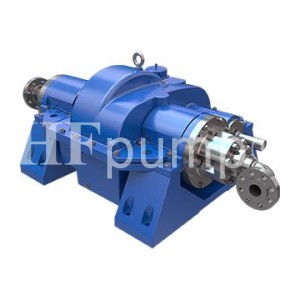
High temperature, high pressure, media with trace particles, continuous operation, main refining unit: Prioritize API610 BB5 multi-stage pump.
Temperature exceeding 350°C, containing coke fines or crystals, requiring 24-hour continuous operation Regenerative turbine pump not recommended.
Projects exported to Russia, Central Asia, or large overseas EPC projects: API610 BB5 multi-stage pump is more reliable regarding certification, documentation, spare parts, and on-site acceptance.
toxic, flammable, explosive, or highly corrosive media: Prioritize the BB5 pump type with a double-case structure and a more comprehensive API682 sealing system.
II. Different Structural Principles of the Two Pump Types, Cannot Be Simply InterchangedThrough on-site selection, disassembly/inspection, test bench trials, and failure analysis, we have found that although both API610 BB5 multi-stage pumps and regenerative pumps can be used for-flow, high-head scenarios, their pressurization logic is fundamentally different.1. API610 BB5 Double-Case Multi-Stage Barrel PumpThe API610 BB5 multi-stage pump is a high chemical process pump, featuring a double-case barrel-type structure. Internally, it consists of multiple impellers arranged in series or back-to-back, achieving head incrementally through multiple centrifugal impeller stages. The core characteristics of this structure are: high pressure-bearing capacity of the outer casing the inner cartridge assembly can be completely withdrawn for easy maintenance; centerline support design suitable for high-temperature conditions; multi-stage impellers suitable for continuous high-head conveyance; compatibility with API682 mechanical seals and various flush plans; suitable for long-term continuous operation scenarios like oil refining, coal chemical processing, coking, hydrogenation, and amine solution circulation. Based on our practical project experience, the BB5 multi-stage pump is better suited for severe operating conditions, especially high temperature, high pressure, corrosive media, media with trace particles, and large overseas refining and chemical projects.2. Regenerative Turbine Pump (also known as Pitot Pump or Rotating Jet Pump)The regenerative turbine pump has a relatively simple structure, mainly consisting of a high rotating rotor chamber and a stationary collector tube. The media enters the rotor chamber, rotates at high speed with the rotor, and then converts kinetic energy into pressure energy through the tube. Its characteristics are: a single stage can achieve relatively high head; compact overall size; suitable for very low flow rates; relatively stable discharge pressure; lower initial procurement cost; suitable for clean, normal or medium-low temperature, intermittent operation conditions. However, the regenerative turbine pump has requirements for media cleanliness, speed, temperature, and operational continuity. If the media contains coke fines, crystalline particles, or is at too high a temperature, the collector tube, rotor chamber, and high-speed bearing system are prone to wear, vibration, or operational stability issues.III Core Parameter Comparison: API610 BB5 Multi-St Pump vs. Regenerativeine Pump| Parameter Item | API BB5 Double-Case Multi-Stage | Regenerative Turbine Pump / Pitot / Rotating Jet Pump | |---|---|---| | Main Applicable Standards | API610, ISO13709, GB/T3215 | Typically customized per chemical industry standards or project non-standard requirements | | Typical Flow Range | 15 ~ 750 m³/h low flow conditions can be customized based on hydraulic models | 0.5 ~ m³/h, strong adaptability for very low flow rates | | Typical Head Range | 300 ~ 3300 m, can be further customized for conditions | 80 ~ 1600 m strong single-stage high-head capability | | Design Pressure Capability | Conventionally up to 35 MPa, higher pressure ratings can be customized for special conditions | Conventionally lower pressure rating, cost for high-pressure customization increases significantly | Media Temperature Range | -80°C ~ 450°C, suitable for high-temperature oils, molten salts, molten urea, etc. | Typically suitable for conditions within -10°C 350°C | Media Cleanliness Requirement | Can handle trace coke fines, crystalline particles; requires wear-resistant materials based on conditions | Better suited for clean, particle-free media; particles accelerate collector tube wear | | Sealing System | Can accommodate API682 Plans 32, 53, 54, , etc. | Typically a mechanical seal on the low-pressure suction side; lower sealing safety redundancy | | Common Materials | 316L, 347, 2205 Duplex SS, Hastelloy C-276, Titanium, CF8M, etc. |arily 304, 316L SS; special alloys require customization | | Operating Speed | Typically 1480 / 2980 r/min, operational stability | 2950 ~ 5000 r/min, may speed-increasing gear for high head | | Continuous Operation Capability | Suitable for 24-hour continuous production in refineries, coal chemical plants | Better suited for intermittent or short-cycle operation | | Method | Cartridge pull-out design, suitable for planned major overhauls | Fewer parts, routine minor repairs are relatively convenient | | Initial Procurement Cost | Higher | Lower | | Long-term Total Cost of Ownership | More advantageous continuous production conditions | economical in intermittent use conditions | | Overseas Project Support | Can support EAC certification, Russian documentation, third-party inspection documents | Certification and documentation typically need be prepared per project requirements |IV. of Regenerative Turbine Pumps: Suitable for Very Low Flow, Clean Media, and Intermittent ConditionsWe do not dismiss regenerative turbine pumps. On the contrary, under suitable conditions, they are a very valuable pump type, particularly suitable for the following scenarios:1. Very Low Flow, High Head, Clean MediaWhen the flow rate is below 10 m/h, the media is relatively clean, and the temperature is not, the advantages of the regenerative turbine are clear. Examples include:
Fine chemical reagent conveyance
Pharmaceutical intermediate conveyance
-purity reagent conveyance Small high-pressure cleaning systems
High-pressure conveyance in laboratory or pilot plant units
For such low flow rates, forcing the use of a conventional multi pump may result in suboptimal hydraulic efficiency and higher structural size and procurement costs. A regenerative turbine pump can achieve high head with a single stage, has a small footprint, and is better suited for small skid-mounted units.2. Applications Sensitive to Pressure PulsationRegenerative turbine pumps provide relatively stable discharge pressure, suitable for some applications sensitive to pressure pulsation, such as:
Conveyance upstream of online analyzers
Support conveyance for chromatography equipment
High-purity chemical conveyance
Precision metering or test systems In these scenarios the system requires high pressure stability, and the regenerative turbine pump reduce impact on downstream instrumentation or analytical equipment.3. Short-term Projects or Budget-Constrained ProjectsRegenerative turbine pumps have relatively simple structure with fewer parts, and their initial procurement cost usually lower than a BB5 multi-stage pump of the same head rating. For short-term use, intermittent operation, clean media, and low-risk projects, regenerative turbine pumps can effectively control investment costs.V Limitations of Regenerative Turbine Pumps: Caution Required for High Temperature, Particles, and Continuous OperationWhile regenerative turbine pumps have in very low flow, clean media conditions, they have clear boundaries in severe chemical scenarios like refining and coal chemical processing.1. Unsuitable for Media Temperatures Above 350°C rotor chamber of a regenerative turbine pump rotates high speed. At high temperatures, challenges with thermal deformation, clearance changes, and dynamic balance control increase. When media temperatures reach above 350°C, for coker oil, residue, or molten salt at 380-420°C, long-term stability decreases significantly. For high-temperature conditions above 400°C, generally do not recommend a regenerative turbine pump.
Unsuitable for Media Containing Coke Fines, Crystals, and Particles
The collector tube structure of a regenerative pump is relatively sensitive. If the media contains trace coke fines, salt crystals, or other fine particles, long-term operation will accelerate erosion and wear of the collector tube. In like delayed coking, high-temperature oil slurry, or media with salt crystals, regenerative turbine pumps are prone to:
Collector tube wear
decline
Discharge pressure fluctuation
Increased vibration
Shortened maintenance intervals
3. High-Speed Operation Imposes Higher Requirements on Bearings and FoundationsRegenerative turbine pumps often require higher rotational speeds for high-head conditions, and some conditions may require speed-increasing gears. High-speed operation imposes higher demands on bearings, couplings, foundation stiffness, and installation precision. If the unit requires 24-hour continuous operation, especially in main refinery process units, the maintenance frequency failure risk of the regenerative turbine pump need evaluation.4 Insufficient Safety Redund for High-Risk MediaFor flammable, explosive, highly toxic, or highly corrosive media, pump sealing safety is critical. Regenerative turbine pumps only have a mechanical seal on the low-pressure suction side offering less overall safety redundancy to a BB5 double-case structure with an API682 sealing system., for high-risk media,-pressure ratings, and continuous production scenarios, we tend to recommend the API6105 multi-stage pump.VI. Advantages of API610 BB5-Stage Pumps: Reliable in Severe Chemical ConditionsThe API610 BB5 multi-stage pump is a common high-pressure process pump type in refining, coal chemical, and largePC projects, especially suitable for low-flow,-head, high-temperature high-pressure, and continuous operation conditions.1. for High-Temperature,-Pressure Continuous OperationThe BB5 pump uses a double-case barrel-type structure. The pressure-bearing casing has high strength, and the centerline support minimizes the impact of high-temperature thermal expansion on alignment and operational stability. BB5 multi-stage pumps are more in the following conditions:
High-temperature coker oil
-temperature circulating oil
Molten salt media
High-temperature asphalt
Molten urea
High-pressure feed for hydrogenation units
High-pressure amine solution circulation
Conveyance of sour water corrosive media
For high-temperature conditions above 350°C, BB5 multi-stage pump better suited for long-term operation than the regenerative turbine pump.2 Can Adapt to Media with Trace Particles and CrystalsDepending on the media conditions, the BB5 pump can be customized through models, impeller design, wear ring clearances, wear-resistant materials, and flush plans. For media with trace coke fines, salt crystals, or slight solid particles, reasonable design can improve wear resistance and operational reliability. In contrast, the regenerative turbine pump has higher cleanliness requirements for the collector tube and rotor chamber and is not suitable for long-term conveyance of media containing particles.3 More Comprehensive Sealing System, Suitable for High-RiskBB5 multi-stage pumps can be configured with API682 sealing systems based on media hazard level, for example:
32 external flush
Plan 53 pressurized dual seal
Plan54 external circulation system
Plan 74 dry seal system
andem seal or double seal configuration
For flammable, explosive, highly toxic toxic, or highly corrosive media, the sealing safety level and system redundancy of the BB5 are significantly higher.4. Suitable for Overseas EPC and Projects in Russia, Central AsiaIn refining projects in Russia, Central Asia, Eastern Europe, and the Middle East, purchasers typically focus not only on the pump itself but also on documentation completeness and certification support capabilities, such as:
EAC Customs Union certification
Explosion-proof motor support
Russian language drawings
Russian language operation and maintenance
Material certificates
Hydrostatic test reports
Performance test reports
Third-party inspection documents
Spare parts lists and wear parts lists
As a standard API610 pump type, the BB5 multi-stage pump more easily meets the technical documentation, review, and acceptance requirements of large EPC projects.VII. Shortcomings of BB5 Multi-Stage Pumps: Not All Low Flows Require BB5As a manufacturer, we do not simply state that all low-flow, high-head conditions must use a BB5. While the BB5 multi-stage pump is highly reliable, it also has its own shortcomings.1. Higher Investment Cost for Very Low Flow ConditionsWhen the flow rate is below m³/h and the is a clean liquid at normal temperature, the cost and manufacturing complexity of a BB5-stage pump can be higher than a regenerative turbine pump. For small pilot plants, temporary units, or low-risk intermittent conditions, the regenerative turbine pump is often more economical.2. Physical SizeThe BB5 multi-stage pump has double-case structure with multiple internal impeller stages, making its overall size and weight larger than a regenerative turbine pump. For small skid-mounted systems with very tight space constraints, layout can be more challenging.3. Requires Certain Lifting CapabilitiesAlthough the BB5 multi pump allows for cartridge pull-out maintenance, it still requires a manual hoist, small lifting equipment, or maintenance space on-site. For small pilot plants, the maintenance process can be more complex than for a regenerative turbine pump.VIII. Quick Selection Table by Industry/Application| Application / Condition | Recommended Pump Type | Reason for Recommendation | |---|---|---| Fine chemical reagent conveyance, normal temp, clean, very low flow, intermittent | Regenerative Turbine Pump | Small footprint, low cost, good efficiency at low flow | | Pharmaceutical intermediate, high-purity reagent conveyance | Regenerative Turbine | Stable pressure, suitable for clean media | | high-pressure cleaning systems | Regenerative Turb Pump | Single-stage high head, compact structure | | High-pressure conveyance in lab or pilot plants | Regenerative Turbine Pump | Low investment cost, simple maintenance | | Delayed coker circulating oil in refining | API610 BB5 Multi-Stage Pump | High temp, contains coke fines, continuous operation; regenerative turbine unsuitable | | High-pressure feed for hydrogenation units | API BB5 Multi-St Pump | High-pressure continuous, high safety requirements | | Concentrated solar power molten salt system | API6105 Multi-Stage Pump High media temperature, requires high-temp structural design | |ten urea conveyance | API BB5 Multi-Stage | High risk of high-temp crystallization, requires sealing and heat tracing | | High-pressure amine solution circulation | API610 BB5 Multi-Stage Pump | Media corrosiveness and safety requirements are high | | Acid gas removal unit | API610 BB5 Multi-Stage Pump | High-risk media, recommend double-case and high-grade seals | | Overseas refining projects in Russia, Central Asia | API BB5 Multi-Stage | API610 standard, EAC certification, and documentation support are more comprehensive | | Short-term temporary projects, normal temp clean media | Regenerative Turbine Pump | Low initial investment, installation |IX. Condition Selection Case StudiesCase 1: Flow 8 m³/h Head 900 m Normal Temperature Clean Reagent ConveyanceThis is a typical low flow, high head, clean media conveyance condition. If the media has no crystals, no particles, no strong corrosion, and the operates intermittently, we recommend prioritizing the regenerative turbine pump. Reasons:
Flow is too low, BB5 multi-stage pump investment is high.
Regenerative turbine pump is, better for small skid-mounted units.
Normal temperature clean media will not significantly accelerate collector tube wear.
Intermittent operation imposes less stress on high-speed bearings and the sealing system.
However, the subsequent process might involve temperature increase, or if crystals, polymerization, or particles might appear in the media, is recommended to reserve space and nozzle conditions for a BB5 multi-stage pump during the design phase to avoid difficulties in future modification.Case 2: Flow 20 m³/h Head 1200 m Coker Circulating Oil Temperature 390°CThis condition is not recommended for a regenerative turbine pump; the API610 BB5 multi-stage pump should prioritized. Reasons:
Media temperature approaches 400°C, the long-term stable temperature range suitable for regenerative turbine pumps.
C circulating oil may contain coke fines.
The unit typically requires 24-hour continuous operation.
High-temperature, high-pressure oil requires high sealing safety.
BB5 double-case structure is better suited for controlling high-temperature thermal expansionUsing a regenerative turbine pump in this condition would likely lead to issues like collector tube wear, increased vibration, shortened bearing life, and frequent maintenance.
Case 3: Russian Refinery Revamp Project, Low, High Head, High-Temperature Oil ConveyanceOverseas refining projects consideration not only of pump parameters but also certification and documentation support. Russian and Central Asian typically have specific requirements for EAC certification, explosion-proof ratings, Russian language documentation, third-party inspection documents, and spare parts lists. In such projects, we strongly recommend selecting the API610 BB5 multi-stage pump. Reasons:
API610 standard is easier to pass review by design institutes and end-users.
BB5 structure is suitable for high-temperature, high-pressure continuous operation.
Can support EAC certification and Russian language technical documents.
Spare parts, sealing systems, and test documentation are easier to standardize.
On-site acceptance and maintenance are more convenient later.
X. Key Parameters to Confirm During SelectionBefore deciding between a BB5 multi-stage pump and a regenerative turbine pump, recommend customers provide at least the following parameters: | Parameter Category | Content to Confirm |
上一篇:Selection and Application Guide for API685 Magnetic Pumps and Shield Pumps in Different Chemical Engineering Scenarios 下一篇:Breaking the monopoly of foreign high-end pump technology: Research on the localization of Jiangsu Haifa's API610/685 high-temperature, high-pressure, deep-cooling special pumps
Jiangsu Haifa Machinery Manufacturing Co., Ltd.
📍 Headquarters: Jingjiang Economic and Technological Development Zone, Jiangsu Province (Yangtze River Delta Ecological Green Integration Demonstration Zone, Jingjiang Park)
📞 Hotline: (086)13905263417 & (086)13908365805
📠 Fax: (086)0523-84323581
📧 Email: jsareva@163.com jslgpump@gmail.com
🔧 Technical Support: One-stop service for pump & valve customization, non-standard design, on-site surveying, maintenance and repair
Member of China General Machinery Industry Association | Director of Valve Association | SINOPEC Resource Market Member Factory

Get QR Code