
Key Technologies and Development Trends of 750℃ Ultra-high Temperature Molten Salt Pumps
2026-08-15 15:13:46 478 江苏海珐Introduction
With the development of concentrated solar power (CSP), long-duration energy storage, and new energy systems, molten salt technology has become an important technical route in the global new energy sector due to its advantages of high-temperature heat transfer, efficient energy storage, and safe and stable operation. As the core power equipment in molten salt circulation systems, molten pumps are hailed as the "power heart" of CSP and molten salt energy storage systems. However, due to long-term operation in high-temperature (600°C or even above 700°C) and corrosive environments, molten salt pumps face significant challenges in materials, sealing, bearing lubrication, and reliable operation, making them one of the key technologies for the domestic development of high-temperature energy storage equipment.
Global Development Status of Molten Salt Pump Technology
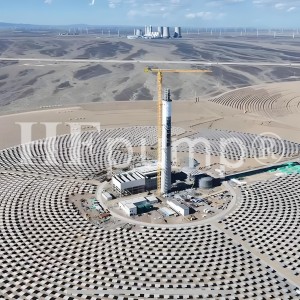
Currently, molten salt pump technology worldwide is mainly applied in tower-type CSP plants, parabolic trough CSP plants, and high-temperature molten salt energy storage systems. Representative foreign companies include Flowserve (USA) and Sulzer (Germany), whose products primarily adopt vertical barrel pumps and vertical long-shaft pump structures, focusing on solving issues of thermal expansion control, shaft system stability, and sealing reliability during high-temperature medium transport. Traditional CSP adopts nitrate molten salt systems with operating temperatures typically ranging from 300°C to 600°C With the development of third-generation CSP technology, chloride molten salt systems have gradually attracted attention, enabling operation above 700°C improve energy storage density and thermal efficiency, while simultaneously imposing higher requirements on the corrosion resistance of pump materials.
Core Technical Challenges of Ultra-High-Temperature Molten Salt Pumps
High-Temperature Molten Salt Hydraulic Model Design
The physical properties of molten salt change significantly at high temperatures, with density, viscosity, and vaporization characteristics differing from those at ambient temperature. Conventional centrifugal pump hydraulic models cannot be directly applied, requiring the development of dedicated impeller, guide vane, and flow passage design technologies for high-temperature molten salt conditions. Optimizing impeller inlet structures and reducing losses in local high-velocity zones to improve pump efficiency and operational stability are important foundations for the long-term reliable operation of 700°C molten salt pumps.
High-Temperature and Corrosion-Resistant Material Technology
Molten salt environments cause oxidation, intergranular corrosion, and elemental migration in metallic materials. Chloride systems, in particular, exhibit stronger corrosive effects on stainless steel and ordinary alloys. Current international research focuses on nickel-based superalloys, special austenitic stainless steels, surface protective coating technologies to extend the service life of key components such as pump casings, impellers, and shafts.
High-Temperature Bearing and Lubrication Technology
Molten salt pumps typically use-temperature medium-lubricated bearings or special high-temperature-resistant bearing structures. Since conventional lubricating greases cannot meet the 600–700°C environment, it is necessary to develop high-temperature solutions using ceramic materials, cemented carbides, graphite composite materials, etc., while addressing wear, thermal expansion, and long-term stable operation issues.
Leak-Free Sealing Technology
High-temperature molten salt is prone to solidification and crystallization, making traditional mechanical seals susceptible to failure. Therefore, advanced international technologies are gradually adopting canned structures, gas-protected seals, high-temperature carbon ring seals, and special combined sealing solutions to achieve zero-leakage operation.
750°C Molten Salt Pump Testing and Intelligent Early Warning Technology
To meet the demands of next-generation high-temperature CSP and energy storage systems, establishing a 700°C ultra-high-temperature molten salt pump test platform has become a key technological breakthrough direction. The test system needs to possess: high-temperature molten salt circulation simulation capability; pump performance testing and efficiency evaluation; online monitoring of vibration, temperature, and bearing condition; corrosion state analysis and life prediction; and intelligent fault early warning functions. Through digital monitoring systems, abnormal bearing conditions, thermal deformation, seal degradation, and other issues can be identified in advance, improving equipment operational reliability.
Significance of Domestic Development
The 700°C ultra-high-temperature molten salt pump integrates technologies from multiple fields including fluid mechanics, materials science, mechanical sealing, and intelligent monitoring, making it an important component of the domestic development of high-temperature energy storage equipment. Breaking through key technologies for high-temperature molten salt pumps will not only support the large-scale development of CSP but also promote molten salt energy storage, industrial waste heat utilization, and the construction of new energy systems. In the future, as the demand for long-duration energy storage in new energy power systems continues to grow, high-efficiency, high-reliability domestically produced ultra-high-temperature molten salt will play an increasingly important role in the global energy transition.
References
Robb K., Goth N., Kappes E., Qu J., He X. Development of High Temperature (>700°C) Molten Salt Pump for Gen3 Solar Power Tower Systems, 2024.
Flowserve. Concentrated Solar Power Pump Technology.
Sulzer. Powerful Storage for Renewables – 700°C Molten Pump Application.
Development History of the World's First-Generation Molten Salt Pump
The development of molten pumps is closely related to concentrated solar power (CSP) technology. In the 1970s 1980s, U.S. Department of Energy (DOE) Sandia National Laboratories conducted research on solar tower power technology, successively building the Solar One and Solar Two demonstration projects, which laid the foundation for modern molten salt energy storage technology. In 1995, the Solar One project in Barstow, California, was upgraded the Solar Two molten salt tower-type CSP demonstration plant, which for the first time adopted a sodium nitrate/potassium nitrate mixed molten salt (60%NO₃ + 40% KNO₃) as the heat transfer and energy storage medium on a large scale. The project was equipped with a high-temperature molten salt circulation system, cold salt pumps and hot salt pumps marking an important starting point for the engineering application of modern large-scale molten salt pumps. The salt pumps used in Solar Two adopted a vertical long-shaft structure, with the pump installed inside the molten salt storage tank and the impeller driven through a long shaft. Since the operating temperature reached approximately 565°C, equipment needed to address key issues such as high-temperature thermal expansion, shaft system stability, material corrosion, and high-temperature bearing lubrication. Related research also promoted the subsequent development of high-temperature long-shaft molten salt pump technology.
The700°C ultra-high-temperature molten salt pump requires breakthroughs in: high-temperature hydraulic model design technology to solve efficiency degradation and operational stability issues caused by changes in molten salt physical properties; corrosion-resistant special material technology to develop nickel-based alloys, high-temperature stainless steels, and surface protection technologies; high-temperature bearing and lubrication technology to ensure shaft system reliability under long-term operating conditions; and-free sealing technology to prevent salt solidification, leakage, and equipment failure.
High Temperature Molten Salt Pump
Molten Salt Circulation Pump
Molten Salt Pump Manufacturer
上一篇:Design and localization application of high-pressure decoking water pump - API610BB5 multistage pump technology for 3.2 million tons/year delayed coking unit 下一篇:The localization development of the world's first nuclear power main pump and the technological innovation of high-reliability canned motor pumps
Jiangsu Haifa Machinery Manufacturing Co., Ltd.
📍 Headquarters: Jingjiang Economic and Technological Development Zone, Jiangsu Province (Yangtze River Delta Ecological Green Integration Demonstration Zone, Jingjiang Park)
📞 Hotline: (086)13905263417 & (086)13908365805
📠 Fax: (086)0523-84323581
📧 Email: jsareva@163.com jslgpump@gmail.com
🔧 Technical Support: One-stop service for pump & valve customization, non-standard design, on-site surveying, maintenance and repair
Member of China General Machinery Industry Association | Director of Valve Association | SINOPEC Resource Market Member Factory

Get QR Code