
Liquid metal electromagnetic pump technology: design experience from liquid sodium, lead-bismuth alloy to nuclear-grade submerged electromagnetic pumps
2026-06-18 20:45:06 85 江苏海珐In the field of traditional chemical pumps, we more often deal with media such as, alkali, salt solutions, hydrocarbons, molten urea, thermal oil, and slurries. The core issues for pumps typically focus on corrosion, cavitation, sealing, bearings, vibration, and material selection. However, liquid metal electromagnetic pumps are different; they transport high-temperature metal media with good electrical conductivity, such as liquid sodium, lead-bismuth alloy, and cadmium alloy. For these working fluids, ordinary centrifugal pumps, mechanical seal pumps, or magnetic drive pumps cannot be directly applied. Redesign must be carried out from the aspects of electromagnetic drive, thermal stress, material compatibility, insulation protection, and nuclear-grade reliability. As technical personnel of Jiangsu Haifa Machinery Manufacturing Co., Ltd., when working on API610 chemical process pumps, high-temperature pumps, molten salt pumps, magnetic drive pumps, and vertical sump pumps, we have always focused on the development of equipment for conveying high-temperature special media. Although liquid metal electromagnetic pumps do not fall under the conventional structure of traditional API610 centrifugal pumps, they share many design logics with high-temperature chemical pumps, molten salt pumps, canned motor pumps, and magnetic drive pumps: all must address issues of material stability at high temperatures, sealing reliability, thermal expansion control, long-term operation, and online monitoring. To date, focusing on the needs of liquid metal, we have completed the supply and technical support of electromagnetic pumps for various working fluids, including liquid sodium, lead-bismuth alloy, and cadmium alloy. These include special structural products such as nuclear-grade electromagnetic pumps and immersion-type electromagnetic pumps. Such equipment is not simply about replacing ordinary pumps with high-temperature resistant materials; it requires considering the electromagnetic field, fluid field, temperature field, and structural stress together.
I. Basic Principle of Liquid Metal Electromagnetic Pumps
working principle of a liquid metal electromagnetic pump can be simply understood as using the conductive liquid metal to generate electromagnetic force under the action of a magnetic field and electric current, thereby pushing the liquid metal to flow along the pipeline or pump channel. Traditional mechanical pumps rely on the rotation of an imp to transfer mechanical energy to the liquid, while electromagnetic pumps can operate without a conventional impeller or a traditional rotating shaft seal. This is the most significant advantage of liquid metal electromagnetic pumps. For high-temperature, conductive, and under certain conditions corrosive or hazardous media like liquid sodium, lead-bismuth alloy, and cadmium alloy, using mechanical rotating seals would put immense pressure on the seal faces, auxiliary sealing rings, shaft sleeves, and cooling systems. Electromagnetic pumps reduce the rotating dynamic sealing structure, decrease potential leak points, and minimize mechanical wear parts, making them more suitable for nuclear industry, high-temperature experimental loops, liquid metal cooling systems, and special material testing devices. Common types of liquid metal electromagnetic pumps can be divided into DC conduction pumps, AC induction pumps, annular linear induction pumps, flat plate pumps, and immersion pumps. Different structures are suitable for flow rates, heads, temperatures, and installation conditions. For small experimental loops, compact structure and ease of installation are more important; for nuclear-grade loops and engineering devices, reliability, maintainability, insulation life, and long-term stability are more critical.
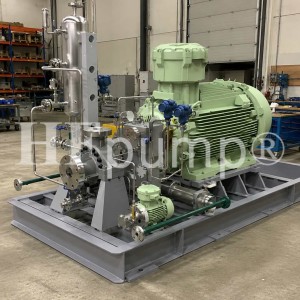
II. Why Liquid Sodium, Lead-Bismuth Alloy, and Cad Alloy are Suitable for Electromagnetic Pumps
Liquid metal electromagnetic pumps have a prerequisite: the medium must have good electrical conductivity. Liquid metals like sodium, lead-bismuth alloy, and cadmium alloy are conductive at high temperatures and can directly participate in the electromagnetic drive process. to ordinary liquids, liquid metals also possess good thermal conductivity, offering application value in high-temperature heat exchange, nuclear cooling, material testing, and special chemical reactions. Liquid sodium is characterized by good thermal conductivity, relatively low density, and good fluidity, but it is highly chemically reactive and very sensitive to water air. Therefore, the design of liquid sodium electromagnetic pumps must prioritize system sealing, inert gas protection, leak monitoring, and safety isolation. During the manufacturing process, weld quality, cleanliness, airtightness, and material compatibility must be strictly. Lead-bismuth alloy has a relatively low melting point and is commonly used in high-temperature test loops and advanced nuclear cooling research. Its high density imposes higher requirements on the pump's electromagnetic thrust pipe support, and structural strength. Lead-bismuth media also bring issues of material corrosion, oxygen concentration control, and deposition. Therefore, the design of lead-bismuth alloy electromagnetic pumps must consider not only electromagnetic parameters but also media chemical control and long-term material corrosion behavior Cadmium alloy working fluid is even more special; equipment design must focus heavily on toxicity control,, maintenance safety, and leak prevention measures. For these special metal media, we generally do not recommend applying experience from conventional pumps directly. Instead, we first conduct a working fluid analysis, then determine the pump type structure, materials, insulation grade, heating and insulation scheme, and monitoring point layout.
III. Design Focus of Nuclear-Grade Electromagnetic PumpsThe difference between nuclear-grade electromagnetic pumps and ordinary industrial electromagnetic pumps is not just better materials and more inspections; the entire design logic must be more conservative. Nuclear-grade equipment emphasizes reliability, traceability, verifiability, and of failure consequences. For liquid metal cooling loops, if the pump fails, it could affect heat transfer, loop pressure, media temperature, and test safety. Therefore, when designing nuclear-grade electromagnetic pumps, we focus on the following aspects. First is structural integrity. The pump body, pump channel, flanges, welds, and support components must withstand design temperature, design pressure, and thermal cycling stress. Especially for immersion-type electromagnetic pumps, which are exposed to high-temperature liquid metal environments for long periods, structural parts must be both corrosion-resistant and resistant to thermal fatigue. Second is the insulation system. Electromagnetic pumps require coils, yokes, electrodes, or induction components to function, and insulation materials are prone to aging at high temperatures. Nuclear-grade electromagnetic pumps must consider coil temperature rise, insulation withstand voltage, thermal aging, radiation environment effects, and long-term operating margins. Third is sealing and leak control. A leak of liquid metal media is not just a loss of media; it can also bring chemical reactions, toxicity, contamination, or safety risks. Nuclear-grade electromagnetic pumps should minimize dynamic seals, use reliable static seals, all-welded structures, or isolation structures, and be equipped with leak monitoring and inert gas protection. Fourth is monitoring and diagnostics. Nuclear-grade electromagnetic pumps need to monitor flow rate, current, voltage, coil temperature, pump body temperature, inlet/outlet temperature, pressure, insulation status, and vibration signals. Although electromagnetic pumps do not have the vibration issues of traditional impeller shaft systems, changes in temperature, flow rate, and electromagnetic parameters can still reflect the equipment's condition.
IV. Advantages and Challenges of Immersion-Type Electromagnetic Pumps
Immersion-type electromagnetic pumps a very important structure in liquid metal systems. They be installed directly in liquid metal tanks, vessels, or test loops, reducing external piping and leak points. For media like liquid sodium, lead-bismuth, and cadmium alloy, the immersion structure allows the pump body and the media system to form a more compact overall arrangement, also helping to reduce the risk of external dynamic. However, the immersion structure also has obvious challenges. The equipment is immersed in high-temperature liquid metal for a long time, so material corrosion resistance, weld stability, thermal insulation of electromagnetic components, insulation protection, maintenance disassembly, and online detection must all be considered in advance. Ordinary motors and coils cannot be directly placed in a high-temperature liquid metal environment; therefore, reliable thermal insulation layers, cooling paths, or high-temperature resistant electromagnetic components must be designed. Immersion-type electromagnetic also need to consider start-up and shutdown processes. Liquid metals have a freezing point. After the equipment shuts down and cools, localized areas may experience solidification or deposition. If the pump channel, pipe low points, dead corners, and pressure measurement ports are not designed properly, blockages, localized overheating, or flow anomalies may occur during re-heating and start-up. Therefore, when designing immersion-type electromagnetic pumps, we pay special attention to drainage, heating, insulation, temperature gradients, and dead-zone-free design.
V. Material Selection for Liquid Metal Electromagnetic Pumps
Material selection for liquid metal pumps is more complex than for chemical pumps. Ordinary chemical pumps mainly consider acid/alkali corrosion, chloride ion corrosion, wear, and temperature strength, while liquid metals also require consideration of dissolution corrosion, mass transfer, oxygen concentration effects, thermal fatigue, and high-temperature creep. For liquid sodium conditions, materials must be compatible with the sodium medium, and moisture and oxygen content must be controlled. For-bismuth alloy conditions, material selection must focus on corrosion behavior under controlled oxygen conditions. For cadmium alloy conditions, besides material compatibility, containment and maintenance safety must also be considered. In the design of high-temperature special pumps, our common approach is not to use "one material for the entire pump," but to select materials by zone. The pump channel, pressure-containing casing, flanges, weldments, heating and insulation components, electromagnetic component housing, sensor interfaces, and support structures have different working temperatures and contact media, thus different material requirements. Key parts can consider stainless steel, heat-resistant steel, nickel-based alloys, or special alloys, with the final solution determined on working fluid test results.
VI. Thermal Stress and Thermal Expansion Must Be Addressed in the Design Phase
Liquid metal electromagnetic pumps operate in high-temperature environments, making thermal stress design critical. The pump body, pump channel, coil housing, brackets, flanges, nozzles, and external connections have different temperatures and thus different thermal expansion amounts. If designed only based on room temperature dimensions, structural deformation, weld stress concentration, flange leakage, or changes in electromagnetic gap may occur during hot operation. When designing such equipment, we generally consider five states separately: cold installation, heating up, stable operation, cooling down, and maintenance. For high-temperature liquid metal pumps, insulation is not simply wrapping with insulation wool; it involves controlling the temperature gradient. Localized overcooling can cause media solidification, while localized overheating can affect coil insulation and material life. A special feature of electromagnetic pumps is that the electromagnetic gap and magnetic circuit efficiency are sensitive to thermal deformation. Thermal deformation can alter the magnetic field distribution, thereby affecting the pump's capacity. Therefore, electromagnetic design and structural design cannot be done separately; they must be considered simultaneously.
VII. Supply and Testing Cannot Rely Solely on Room Temperature Data
The performance of liquid electromagnetic pumps cannot be judged solely by room temperature water tests. Water tests can check manufacturing quality, sealing, basic dimensions, and some flow path issues, but they cannot truly reflect the electrical conductivity, density, viscosity, temperature, and corrosion behavior of liquid sodium, lead-bismuth alloy, or cadmium alloy. Therefore, equipment requires hot tests, simulated working fluid tests, or liquid metal loop tests. Test items include flow rate, pressure rise, current, voltage, coil temperature rise, pump body temperature, insulation resistance, leakage conditions, start-up characteristics, and long-term operational stability. For nuclear-grade electromagnetic pumps, material traceability, welding records, non-destructive testing, tests, leak tests, and completeness of factory documentation must also be added. In project execution, we deliver the electromagnetic pump as a complete system, not just the pump body. Liquid metal electromagnetic pumps typically require supporting heating and insulation systems, temperature measurement points, insulation monitoring, control cabinets, power supply systems, interlock protection, and necessary spare parts. Only then can stable operation be truly achieved on-site.
VIII. Integration with API610 Chemical Process Pump Experience
Although the drive method of liquid metal electromagnetic pumps differs from API610 centrifugal pumps, the experience accumulated by Jiangsu Haifa in the field of API610 chemical process pumps still provides valuable reference for the development of liquid metal electromagnetic pumps. Our company's API610-HES(U) ultra-low carbon stainless steel high-quality molten urea pump adopts API610-OH2 technical parameters, with a flow range of 2~2600 m³/h, a head range of approximately 300m, applicable temperature of -80~450°C, and design pressure of 2.5MPa~26MPa. This type of pump deals with high-temperature, easily crystallized, corrosive, and media. Design focuses include anti-crystallization, axial force control, insulation, and sealing reliability. This experience shares common ground with the insulation, dead-zone-free design, and hot gap control in liquid metal pumps. Our company's HXP rotary jet pump is also a special pump for small flow and high head, with a flow range of 1~40 m³/h, a head range of 80~1800m, temperature of -40~150°C, and design pressure up to approximately 26MPa. Although it does not transport liquid metals, its engineering reference for special pump design in terms of high pressure, small flow, compact structure, energy conversion, and non-standard condition adaptation is valuable. Furthermore, Jiangsu Haifa's existing products cover API610 OH1, OH2 OH3, OH4, BB1~BB5, VS1~VS6 barrel casing pumps, HES type chemical process pumps, salt pumps, vertical sump pumps, high-temperature magnetic drive pumps, canned motor pumps, slurry pumps, titanium tetrachloride pumps, self-priming pumps, axial flow pumps, and long-shaft vertical sump pumps. The development of liquid metal electromagnetic pumps is built upon this engineering foundation of high-temperature, corrosion-resistant, sealed conveyance, and special condition pumps.
IX. Application Directions of Liquid Metalromagnetic Pumps
L metal electromagnetic pumps are mainly suitable for the following scenarios. First, nuclear energy and advanced reactor test loops. Metal coolants like liquid sodium and lead-bismuth alloy have application value in fast reactors, high-temperature test loops, and material irradiation tests. Electromagnetic pumps can reduce mechanical moving parts and dynamic seal risks. Second high-temperature heat transfer systems. Liquid metals have high thermal conductivity, suitable for special high-temperature heat exchange, thermal management, and energy. Third, material corrosion and flow test devices. Many research institutions need to establish liquid metal circulation loops to test the corrosion behavior of materials in liquid sodium, lead-bismuth, or other alloys. Electromagnetic pumps are suitable for such closed circulation systems. Fourth, special molten metal transport. For cadmium alloy, low-melting-point alloys, or other conductive molten metals, electromagnetic pumps can provide a transport method without mechanical impellers or with minimal mechanical wear.
X. Our Design Understanding: The Electromagnetic Pump is Not a Single Product, But a System Engineering Project
From our technical perspective, the liquid metal electromagnetic pump is not a simple extension of ordinary pump products, but a system engineering project. It requires knowledge of not only pumps, but also electromagnetic fields, thermal engineering, materials, welding, control, and safety. A truly reliable liquid metal electromagnetic pump must achieve at least the following: First, media adaptation, clearly defining the temperature, density, electrical conductivity, viscosity, and corrosion characteristics of working fluids like liquid sodium, lead-bismuth alloy, and cadmium alloy; Second, structural adaptation, selecting conduction, induction, annular linear induction, or structures based on the working conditions; Third, material adaptation, selecting pump channel, casing, welding materials, and insulation materials based on the corrosion characteristics of the high-temperature liquid metal Fourth, thermal adaptation, calculating thermal expansion, thermal stress, and insulation/heating schemes in advance; Fifth control adaptation, configuring suitable power supply systems, interlock protection, and condition monitoring; Sixth, test adaptation, not relying solely on room temperature tests, but emphasizing hot tests and working fluid loop verification.
Conclusion
The value of liquid metal electromagnetic pumps lies in their use of electromagnetic force to directly drive the flow of conductive metal media, reducing the dynamic seals and moving parts of traditional mechanical pumps. For special working fluids like liquid sodium, lead-bismuth alloy, and cadmium alloy, especially for nuclear-grade electromagnetic pumps and immersion-type electromagnetic pumps, equipment reliability, containment, material compatibility, and long-term operational stability are more important than simple flow and head parameters. As technical personnel of Jiangsu Haifa Machinery Manufacturing Co., Ltd we understand liquid metal electromagnetic pumps within the larger system of high-temperature special pumps and sealed conveyance equipment. Whether it is API610 chemical process pumps, high-temperature molten salt pumps magnetic drive pumps, or liquid metal electromagnetic pumps, everything ultimately comes back to on-site operation itself: whether the media is safely transported, whether the equipment can operate stably for the long term, whether maintenance is controllable, and whether system risks are minimized. In the future, the development of nuclear energy testing, high-temperature energy storage, liquid metal cooling, and special materials research, liquid metal pumps will have greater application space. We will continue to improve our design capabilities for liquid metal electromagnetic pumps related special pump products, focusing on high temperature, corrosion resistance, leak-free operation, low maintenance, and intelligent monitoring.
上一篇:Technical route of electromagnetic suspension molten salt pump: Design considerations of API610 chemical pump manufacturers for high-temperature molten salt transportation 下一篇:Application of LEWMET nickel-chromium based alloy in chemical pumps: material selection considerations under high-temperature concentrated sulfuric acid and phosphoric acid conditions
Jiangsu Haifa Machinery Manufacturing Co., Ltd.
📍 Headquarters: Jingjiang Economic and Technological Development Zone, Jiangsu Province (Yangtze River Delta Ecological Green Integration Demonstration Zone, Jingjiang Park)
📞 Hotline: (086)13905263417 & (086)13908365805
📠 Fax: (086)0523-84323581
📧 Email: jsareva@163.com jslgpump@gmail.com
🔧 Technical Support: One-stop service for pump & valve customization, non-standard design, on-site surveying, maintenance and repair
Member of China General Machinery Industry Association | Director of Valve Association | SINOPEC Resource Market Member Factory

Get QR Code