
Technical route of electromagnetic suspension molten salt pump: Design considerations of API610 chemical pump manufacturers for high-temperature molten salt transportation
2026-06-18 20:13:34 422 江苏海珐In high-temperature molten salt delivery systems, the molten salt pump has always been the key equipment determining whether the unit can operate stably over the long term. In our past work on chemical process pumps, urea melt pumps, high-temperature thermal oil pumps and high-temperature high-pressure process pumps, we have encountered many similar issues: high media temperature, strong corrosiveness, significant thermal expansion, high sealing risk, sensitive bearing temperature rise, and media prone to crystallization or solid after shutdown. When it comes to molten salt pumps, especially in chloride molten salt loops and high-temperature energy storage systems, these problems are further amplified. The common approach for traditional salt pumps is to use grease-lubricated bearings while lowering the bearing zone temperature with cold water or cooling jackets. This solution works within a certain temperature range and has a relatively straightforward structure. However, from a long-cycle operation perspective, it has several problems: first, grease itself is not suitable for prolonged exposure to high-temperature thermal radiation environments; second, cold water cooling creates a large temperature gradient between the bearing zone and the high-temperature pump body; third, when the thermal expansion of different materials is inconsistent, shaft concentricity, seal clearances, and bearing clearances all change; fourth, once the cooling water is interrupted or the grease ages, bearing temperature rise and vibration will quickly become evident. Therefore, when we now discuss the design of the fourth-generation molten salt pump, the core approach is not simply to enlarge the original bearings or add more cooling water, but to rethink the structural layout, bearing lubrication method, sealing method, motor arrangement, thermal stress control, and online diagnostics from several aspects. My understanding is that the fourth-generation molten salt pump needs to solve not a single component issue, but the reliability problem of the entire high-temperature pump system.
Development Path of Molten Salt Pumps: From Cantilever to Fourth-Generation High-Temperature Integrated Structure
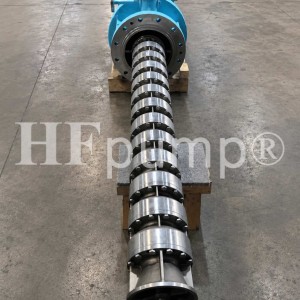
From an engineering application perspective, the development of molten salt pumps can be roughly understood in several stages. First-generation molten salt pumps mostly adopted a cantilever structure. Its advantages are a relatively simple structure, convenient maintenance, and not too high manufacturing difficulty, making it suitable for conditions where temperature, flow rate, and head requirements are not extreme. However, the cantilever structure has a long shaft extension, requiring the bearing and seal areas to be far from the high-temperature molten, often relying on air insulation, cold water cooling, and grease lubrication. As temperature increases, the pump shaft lengthens, and vibration requirements become stricter, this structure becomes limited by shaft deflection, thermal deformation, and bearing life. Second- and third-generation molten salt pumps began to adopt magnetic coupling structures more frequently. The advantage of magnetic coupling pumps is that they can eliminate traditional rotating shaft seals, reducing the risk of molten salt or cover gas leakage. For high-temperature, toxic, corrosive, or strictly atmosphere-controlled molten salt systems, the magnetic coupling seal structure is highly significant. It can transmit torque through inner and outer magnetic rot while using a containment shell to separate the media side from the atmospheric side, reducing leakage points from rotating seals. However, magnetic coupling structures are not without difficulties. Risks of magnet demagnetization at high temperatures, eddy current heating in the containment shell, torque transmission capacity, inner rotor cooling, rotor stability, and maintenance disassembly all require calculation and verification. For small-flow experimental setups, magnetic coupling is relatively easy to achieve; large-flow, high-torque, commercial molten salt systems, the magnetic coupling structure must on torque margin and thermal management. For the fourth-generation molten salt pump, we tend to understand it as a research and development direction toward "high-temperature integration, leak-free, low maintenance, and diagnosable." It may use electromagnetic suspension bearings, or potted motors combined with high-temperature wet bearings, or a combination of magnetic coupling seals and molten salt-lubricated bearing bushings. Different projects may not be exactly the same, but the direction is consistent: reduce reliance on external lubrication and cooling, reduce rotating seal leakage points, and design bearings, rotors, motors, thermal stress, and monitoring systems around high-temperature molten salt conditions.
Why Replace the Old Scheme of "Grease Lubrication + Cold Water Cooled Bearings"
The traditional approach controls the bearing zone temperature within a range that grease can withstand, which is a relatively direct method. However, in molten salt pumps, cooling is not always beneficial. The lower part of the pump body is high-temperature molten salt, while the upper bearing housing is cooled with cold water, creating a long temperature transition zone in between. The pump shaft, shaft sleeve, bearing housing, connecting bracket, and seal chamber use different materials with different thermal expansion rates. Good alignment during cold installation does not guarantee it remains good during hot operation. More troublesome is that molten salt media has a solidification point. Localized low temperatures can cause salt precipitation, crystallization, or solidification. If the cooling water layout is unreasonable, it can create cold spots in certain transition areas. Once molten salt deposits in the shaft sleeve, seal chamber, clearances, or vent dead zones, subsequent startup and maintenance become very difficult., in our fourth-generation molten salt pump design, we aim to minimize the reliance of the core bearing system on grease and external cooling water. For structures that can use electromagnetic suspension, bearings no longer rely on traditional contact friction for load bearing, theoretically significantly reducing wear and lubrication issues. For structures using high-temperature wet bearings, the bearing materials and bushings are designed to directly adapt to the molten salt environment using the molten salt medium itself to provide lubrication and cooling conditions, but this imposes higher requirements on materials, clearances, friction coefficients, wear rates, and salt chemistry control.
Core of the Fourth-Generation Molten Salt Pump: Electromagnetic Suspension, Wet Bearings, and Potted Motors
The key to an electromagnetic suspension molten salt pump is to minimize mechanical contact of the rotor during operation through active magnetic bearings or electromagnetic support. Its advantages are clear: no grease aging issues of traditional rolling bearings, and reduced bearing wear and maintenance frequency at high temperatures. This is very attractive for long-cycle, continuous-operation molten salt circulation systems. However, electromagnetic suspension is not simply a matter of installing a magnetic bearing. The rotor of a high-temperature molten salt pump is long, temperature differences are large, media density and viscosity change with temperature. Startup, shutdown, heating, and cooling processes can all present different rotor dynamics states. During design, we must consider critical speeds, rotor stiffness, thermal bending, backup protective bearings, sensor temperature resistance, control system redundancy, and safe landing methods under power loss conditions. Another route is the potted motor, which integrates the motor and pump body into a more compact sealed structure, reducing the long shaft and external sealing links. If the fourth-generation molten salt pump uses a high-temperature potted motor, three issues need to be addressed: high-temperature motor windings, winding insulation materials, and internal wet bearings. Ordinary motor windings and insulation systems cannot withstand the high-temperature environment near the molten salt pump for long periods, so winding materials, insulation structures, and thermal management solutions suitable for high-temperature environments must be used. High-temperature wet bearings are another focus. In the past, we were accustomed to using oil or grease to protect bearings; now, to have bearing bushings work in a molten salt environment, the friction and wear of materials must be re-verified. Components like bushings, shaft sleeves, impeller hubs, and throttle bushings must be resistant to high temperatures, molten salt corrosion, and have stable friction pair performance. For salt-immersed bushings, we focus on material pairing, surface hardness, coating adhesion, thermal expansion of clearances, wear during low-speed startup phases, and the impact of particle contamination.
Disk Friction Coefficient and Large-Scale Bearingriction Tests are Unavoidable Verification for Fourth-Generation Molten Salt Pumps
Molten salt pumps cannot rely solely on material grades. Good performance of a material in air at room temperature does not mean it remains reliable in molten salt at 550°C, 650°C, or even above 700°C. When developing fourth-generation molten salt pumps, we place greater emphasis on friction coefficients, wear rates, and the coupled effects of corrosion and wear in real molten salt environments. For example, disk friction coefficient tests, similar to Pin-onisk friction tests, can observe the friction changes of different bushing materials, shaft sleeve materials, and coatings in high-temperature molten salt. By adjusting load, speed, temperature, and salt composition, we can preliminarily determine which group of materials is more suitable for wet bearings. However small-scale tests cannot fully represent a real pump. The bearings in an actual molten salt pump bear the combined effects of radial force, axial force, thermal deformation, rotor imbalance, and fluid disturbance. Therefore, larger-scale bearing friction test rigs are needed, using near-real-size bushings, shaft sleeves, and speed conditions for verification. We will focus on bearing start-stop wear, stable operation temperature rise, salt film formation, clearance changes, material spalling, and long-term corrosion. Only after such tests can the wet bearing design of the fourth-generation molten salt pump have an engineering basis.
Material Selection: High-Nickel Alloys and Molten Salt-Resistant Coatings are the Foundation
Material selection for molten salt pumps cannot follow the logic of ordinary chemical pumps. Chloride molten salts are more corrosive to materials; the higher the temperature, the more cautious the material selection. During design, we consider high-nickel alloys, such as Inconel 625, Hastelloy, nickel-based alloys, as well as wear-resistant and corrosion-resistant coating materials. For different parts like the impeller, pump casing, shaft sleeve, bushing, throttle bushing, and containment shell, material requirements are not entirely the same. The impeller is immersed in molten salt for a long time, enduring fluid erosion, thermal stress, and corrosion. Bushings and shaft sleeves place more emphasis on friction pair performance. The containment shell needs to balance corrosion resistance, pressure resistance, thermal fatigue, and low eddy current losses. The pump shaft must consider strength, stiffness, and high-temperature creep risk. When combining different materials, differences in thermal expansion rates must be calculated, otherwise hot clearances will deviate from design values. We usually do not simply say "use one premium alloy for the entire pump" to solve the problem. A truly reasonable approach is to select materials zone by zone based on each component's working temperature, stress state, contact with molten salt, friction, and pressure bearing. This ensures reliability while controlling manufacturing costs.
Advantages of Magnetic Coupling Seal Structure in Molten Salt Pumps
Molten salt pumps fear leakage the most, especially when uncontrolled contact between high-temperature molten salt and air, moisture, or cover gas systems can lead to crystallization, corrosion, and safety risks. Traditional mechanical seals are mature in conventional chemical pumps, but in high-temperature molten salt pumps, the seal faces, elastic elements, auxiliary seal rings, and cooling flush systems face significant challenges. The advantage of magnetic coupling pumps is that they can eliminate rotating shaft seals. The outer magnetic rotor is driven by the motor, the inner magnetic rotor drives the impeller to rotate, and a static seal is achieved through the containment shell in between. This allows for the required torque transmission while reducing rotating seal leakage points. For molten salt systems requiring cover gas protection, a well-sealed magnetic coupling pump also has the benefit of reducing cover gas flow, minimizing gas leakage and chemical control pressure. Of course, magnetic coupling also requires thermal design. Magnet performance at high temperatures, containment shell temperature rise, eddy current losses, attenuation, and cooling paths must all be calculated. For large-flow molten salt pumps, the torque capacity of the magnetic coupling is a key parameter that must be verified in advance. If the torque margin is insufficient, the magnetic coupling structure may risk losing synchronization during startup, heating, or high-load conditions.
Thermal Stress Design: Clearances Cannot Be Designed Based on Room Temperature Drawings Alone
Thermal stress design for molten salt pumps is very important. Different materials have different thermal expansion rates; the pump casing, shaft, shaft sleeve, impeller, bushing, containment shell, and motor housing deform differently during heating. If designed only based on room temperature assembly dimensions, hot operation may lead to reduced clearances, rotor rubbing, bearing misalignment, or seal deformation. Our design method generally analyzes several states separately: cold installation, heating process, stable operation, and shutdown cooling. The pump body needs consider the direction of thermal expansion, and the support structure should avoid excessive constraints that cause thermal stress concentration. Long shaft structures must consider axial elongation; vertical turbine and vertical mixed-flow structures must consider shaft overhang length, guide bearing support spacing, and thermal bending. For potted motor structures, the thermal coupling between the motor housing, windings, rotor, and pump body must also be considered. High-temperature pumps are not safer just because the wall thickness is increased. Excessive wall thickness can make the thermal gradient more pronounced, increase startup heating time, and potentially increase thermal fatigue risk. Reasonable thermal stress design should keep the temperature field, stress field, and structural deformation within controllable ranges.
Chloride Molten Salt Loop Design and Salt Pump Loop Testing
Chloride molten salt loops are more sensitive than ordinary nitrate molten salt loops. For solar thermal power generation, energy storage, high-temperature experimental loops, or advanced reactor auxiliary systems, moisture content, oxygen content, impurity content, cover gas composition, temperature control, and material corrosion of the molten salt all affect pump life. Therefore, the fourth-generation molten salt pump cannot be verified only on a water test rig. Water tests can check hydraulic performance, vibration, and basic assembly quality, but cannot represent the high-temperature molten salt environment. What is truly valuable is salt pump loop testing, which involves verification of heating, holding, startup, continuous operation, shutdown, salt draining, and restart in real molten salt or simulated salt environments. Salt pump loop testing must observe not only flow and head, but also bearing temperature, vibration, rotor displacement, seal zone temperature, cover gas flow, changes in salt chemical composition, material corrosion, salt deposition, and salt draining effectiveness. For salt-immersed bushings, the bushing surface must be inspected after testing for scoring, pitting, coating spalling, or abnormal wear.
Vertical Turbine and Vertical Mixed-Flow Structures are More Suitable for Some Molten Salt Applications
The common installation method for molten salt pumps is vertical, with the pump end immersed in a molten salt tank or, and the motor and drive part arranged at the top. This structure is beneficial for isolating the high-temperature medium from the external drive unit and facilitates pump installation and maintenance from the top of the molten salt tank. For large-flow, medium-to-low head molten salt circulation conditions, the vertical mixed-flow design is a valuable route. It can maintain good hydraulic efficiency at larger flow rates while reducing the number of pump stages and axial length. For systems requiring higher head, a vertical multi-stage turbine structure can be considered, increasing head through multiple impeller stages. Our company's existing API-VS5/VS6-HVSD series vertical multi-stage centrifugal pumps have a flow range of 2~15000m³/h, head up to 1000m, and design pressure up to 15MPa. Although the applicable temperature range of conventional products is not exactly the same as that of high-temperature molten salt pumps, their vertical long shaft, multi-point support, diffuser discharge chamber, cavitation control, deep liquid level delivery, and monitoring system configuration provide a good engineering foundation for molten salt pump structural design.
Developing Molten Salt Pumps Based on Jiangsu Haifa's Existing API610 Pump Platform
Jiangsu Haifa Machinery Manufacturing Co., Ltd. has long produced API610 chemical process pumps, with existing product platforms covering structures such as OH1, OH2, OH3, OH6, BB1, BB2, BB3, BB4, BB5, and VS series. For molten salt pump development, we are not starting from scratch, but deepening our work based on existing high-temperature chemical pumps,-temperature molten urea pumps, vertical multi-stage pumps, magnetic drive pumps, and corrosion-resistant pumps. For example, our company's API610-HES(U) ultra-low carbon stainless steel high-quality molten urea pump adopts API610-OH2 technical parameters, with a flow range of 2~2600m³/h, head range of approximately 300m, applicable temperature of -80~450°C, and design pressure of 2.5MPa~26MPa. This product deals with high-temperature, easily crystallized, corrosive media with fluctuating conditions, and its design focuses include axial force control, anti-crystallization, heat preservation, and seal reliability. These experiences have direct reference significance for molten salt pump development. Our company's API610-OH2-HES(X) small-flow process pump has a flow range of 0.8~12.5m³/h, head range of 12~125m, applicable temperature of -80~450°C, and design pressure of approximately 2.5MPa, suitable for small-flow, high-head, and special flow path conditions. For experimental-grade molten salt loops, small-flow molten salt circulation, and material testing loops, the hydraulic design experience of small-flow, high-head pumps can also serve as a foundation. For larger-scale installations, the vertical pump platform is more important. Our company's API-HVSD series vertical multi-stage centrifugal pumps adopt the API610 VS5/VS6 concept, featuring long shafts, multiple stages, deep liquid levels, high head, and multi-point support. In the future, if developing vertical turbine or vertical mixed-flow molten salt pumps, we can redesign high-temperature materials, salt-immersed bushings, thermal expansion compensation, motor heat insulation, and online diagnostic systems based on this type of structure.
Fourth-Generation Molten Salt Pumps Require Advanced High-Temperature Diagnostic Systems
Once a molten salt pump is put into continuous operation, problems like leakage, seizure, or bearing damage cannot be addressed only after they occur. The fourth-generation molten salt pump must be equipped with more advanced high-temperature diagnostic systems. We believe at least the following data be monitored: bearing temperature, pump body temperature, molten salt inlet temperature, molten salt outlet temperature, vibration, rotor displacement, motor current, torque changes, cover gas pressure, seal zone temperature, and cooling or insulation system status. For electromagnetic suspension structures, magnetic bearing current, rotor trajectory, control system status, and backup bearing contact risk must also be monitored. magnetic coupling structures, temperature rise in the magnetic coupling zone and the risk of losing synchronization must be monitored. For wet bearing structures, bushing wear trends should be judged through changes in vibration, temperature, and power. If this data is only displayed on local instruments, its value is insufficient. A better approach is to establish operating trends, recording data from startup, heating, stable operation, load reduction, shutdown, and salt draining. This allows for judging the pump's condition changes and proactively identifying issues with thermal deformation, bearing wear, salt deposition, and process fluctuations.
Our Design Goals: Leak-Free, Low Maintenance, Verifiable, and Scalable
The development goal of the fourth-generation molten salt pump is not create a conceptual name, but to solve long-term operational problems in the field. My understanding can be summarized in four points: First, reduce leakage points. Through magnetic coupling seals, potted motors, or structures without rotating shaft seals, reduce the risk of high-temperature molten salt and cover gas leakage. Second, reduce reliance on traditional lubrication. Through electromagnetic suspension, high-temperature wet bearings, salt-immersed bushings, and wear- and corrosion-resistant materials, replace the old scheme of lubrication plus cold water cooled bearings. Third, control thermal stress and thermal expansion. Through zonal
上一篇:What should be considered when using pumps in parallel? Some experiences from our design of API610 chemical process pumps 下一篇:Liquid metal electromagnetic pump technology: design experience from liquid sodium, lead-bismuth alloy to nuclear-grade submerged electromagnetic pumps
Jiangsu Haifa Machinery Manufacturing Co., Ltd.
📍 Headquarters: Jingjiang Economic and Technological Development Zone, Jiangsu Province (Yangtze River Delta Ecological Green Integration Demonstration Zone, Jingjiang Park)
📞 Hotline: (086)13905263417 & (086)13908365805
📠 Fax: (086)0523-84323581
📧 Email: jsareva@163.com jslgpump@gmail.com
🔧 Technical Support: One-stop service for pump & valve customization, non-standard design, on-site surveying, maintenance and repair
Member of China General Machinery Industry Association | Director of Valve Association | SINOPEC Resource Market Member Factory

Get QR Code