
Jiangsu Haifa R&D LNG fuel supply high-pressure pump: API 610 VS6 cryogenic liquid supply and high-pressure boosting solution
2026-07-21 08:08:34 365 江苏海珐Abstract As global shipping IMO Tier III carbon emission regulations continue to tighten, the market demand for LNG dual-fuel vessels is expanding rapidly, leaving a significant gap in domestic cryogenic pressurization equipment for FGSS fuel gas supply systems. The Jiangsu Haifa cryogenic pump R&D team has independently developed a complete LNG fuel supply high-pressure pump system, an API 610 VS6 vertical multistage barrel-type cryogenic pump paired with a cryogenic high-pressure cold-end booster module. This system is specifically designed for LNG carriers, dual-fuel container ships, ME-GI high-pressure injection engines, effectively addressing four major industry pain points: easy vaporization of -162°C cryogenic media, low net positive suction head (NPSH), shaft system instability under ship rolling, and cryogenic seal leakage. entire system achieves stable liquid extraction at low tank levels, staged pressurization from 25 to 38, and zero external leakage, fully meeting the design and verification standards of major classification societies.
I. Challenges of Marine LNG Media and FG System Operating Conditions
LNG is stored at atmospheric pressure temperatures as low as -162°C, an extremely low vapor pressure. Even slight ingress or insufficient suction pressure can rapidly generate vapor bubbles, causing cav and severe flow fluctuations, directly impacting the injection stability and combustion efficiency of dual-fuel engines. Additionally, ship navigation involves rolling, pitching, and impact loads, imposing stringent requirements on cry rotor dynamics, bearing lubrication at low temperatures, clearance matching between cold and hot components. Traditional single-stage pressurization equipment cannot simultaneously meet the demands of stable liquid extraction at low tank levels and ultra-high-pressure output. FGSS fuel gas supply system adopts staged architecture, using the API 610 VS6 barrel-type pump as the-end stable liquid supply unit, paired with an independent cryogenic high-pressure cold-end module for final pressurization, adapting to the gas supply conditions of various tonnage dual-fuel vessels
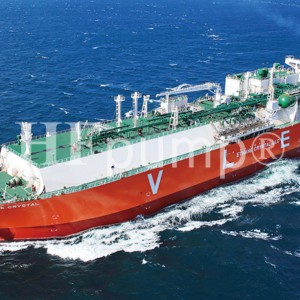
II. Working Principle of API VS6 Cryogenic Pump Staged Pressurization 2.1 VS6 Front-End Cryogenic Liquid Extraction UnitThe entire unit strictly follows 610 and ISO 13709 design specifications for vertical barrel-type pumps, featuring an extended suction barrel and a dedicated inducer. It incorporates a self-developed hydraulic model with NPSHr ≤ 1.0 m for ultra-low cavitation Under low tank level conditions, it continuously extracts pure liquid LNG preventing media flash vaporization and supplying bubble-free stable liquid media to the downstream high-pressure booster unit. The applicable media temperature range is -196°C to -110C.22 Cryogenic High-Pressure Cold-End Booster Module Custom-developed for ME-GI high-pressure direct engines, this module receives stable liquid LNG from the6 pump for secondary pressurization. The’s final gas supply pressure can be adjusted from 25 to 38 MPa based on project. It is equipped with independent nitrogen purge circuit, cryogenic bellows seals, and overpressure protection structures, controlling media temperature rise throughout process to prevent secondary vaporization of LNG under high-pressure conditions.2.3 Full-Range Load Regulation Performance The complete fuel supply system supports stepless regulation from 10% to 100% load, pressure stability deviation controlled within ±1.5% across the entire range. It perfectly adapts to various navigation conditions, including idling,, full load, and variable load transitions.III. R&D Technical Parameters of API VS6 Cryogenic
| Technical Item | R&D Design Indicator | Application Description |
| :--- | :--- | :--- |
| Pump Standard | API 610 VS6 Vertical Multistage Barrel-Type Pump | Meets all classification society verification requirements for vibration, impact, and cryogenic conditions |
|veyed Media | LNG Liquid Methane, Cryogenic Light Hydrocarbons | Adapts to various marineied natural gas fuel media |
| Design Temperature Range | -°C to -110C | Covers LNG and various cryogenic circulating media |
Customizable Flow Rate (Max) | Up 180 m³/h | Can be customized one-to-one based on vessel main engine gas consumption |
| Single Pump Rated Head (Max) | 225 m | Ensures stable liquid intake capability at low tank levels |
| Required NPSH (NPSHr) | ≤ 1.0 m | Industry-leading ultra-low cavitation R&D indicator, no vaporization at low tank levels |
| System Final Pressurization Range | 25 to 38 MPa | Matches ME-GI high-pressure direct injection dual-fuel engines |
| Load Regulation Range | 10% to 100% | Continuous stable regulation across all ship navigation conditions |
| System Pressure Stability | Deviation ±1.5% |vents gas pressure fluctuations from affecting main engine combustion efficiency |
| Cryogenic Thermal Cycling Test | ≥ 200 cycles | Simulates ship start-stop temperature shock conditions |
| Continuous Endurance Test | ≥ 1000 hours | Factory long-term reliability verification |
| External Leage Control | Zero visible external leakage | Complies with marine explosion-proof and environmental safety regulations |
Note: The above table shows standardized R&D indicators. Actual equipment flow rate, head, pressure, material configuration, and test items must be individually calculated and customized based on main engine model, tank parameters, NPSHa, pipeline resistance, and classification society specifications.IV. Four Core Cryogenic Special Technology Breakthroughs 4.1 CFD Low Cavitation Hydraulic Optimization Technology Using 3D CFD fluid, the entire flow path of the suction barrel, inducer, impeller, and guide vanes is optimized to eliminate-pressure vortex zones at the inlet. Tailored to LNG’s low saturation pressure, the global pressure distribution is optimized, significantly reducing the equipment’s required NPSH and fundamentally solving the cavitation problem during low tank level operation.4.2 Rotor Dynamics Verification for Marine Conditions Wet critical speeds are calculated under all operating conditions, and deflection and guide bearing loads are fully verified under ship rolling and pitching conditions. A dedicated cryogenic lubrication circuit is optimized to match the shrinkage gaps of cold and hot, preventing shaft seizure and bushing friction wear failures during cryogenic operation.
4.3 Special Cryogenic Material System
flow-wetted components are made of austenitic stainless steel, cryogenic cast steel, and nickel-based alloys that have cryogenic impact tests, preventing material embrittlement in the -162°C extreme low-temperature environment. The shaft seal is equipped with an API 682 standard cryogenic bellows cartridge mechanical seal, capable of withstanding significant temperature fluctuations.
4.4 Marine Integrated Safety Interlock Control SystemThe entire unit integrates multiple protection modules, including pressureation monitoring, nitrogen purge replacement, emergency overpressure shutdown, and cryogenic overheat interlock shutdown. It features standardized communication interfaces for seamless integration with the ship’s central automation system, enabling remote real-time monitoring, fault warning, and abnormal isolation protection.V.&D Goals for Domestic LNG Fuel Booster Pumps Evaluating the reliability of marine LNG FGSS high-pressure pump should not rely solely on rated output pressure. The core assessment involves three key actual operating indicators: smooth start-up at low tank levels without flash vaporization or flow interruption; rapid pressure tracking during variable load navigation with minimal pressure fluctuation; and quick shutdown and isolation under abnormal media, overtemperature, or overpressure conditions to ensure ship navigation safety. Jiangsu Haifa continuously iterates its cryogenic hydraulic models, cryogenic compensation seal structures, thermal expansion matching solutions, and high-pressure stability control algorithms to create a fully domestic marine LNG fuel booster system that can completely replace imported equipment, balancing operational stability, energy efficiency, and on-site maintenance convenience. It provides complete fluid transfer solutions for new LNG carriers, dual-fuel container ships, vessel retrofit projects.
VI. Workshop Images
FAQ Q1: Can the API 610 VS6 barrel-type pump directly pressurize LNG to MPa? A: No. The VS6 vertical barrel-type pump is positioned as front-end cryogenic liquid and transfer device. Its core function is to draw bubble-free liquid LNG from the cryogenic tank and supply stable liquid media to downstream equipment. The 25–38 MPa ultra-high pressure required by the ME-G main engine is achieved the dedicated cryogenic high-pressure cold-end module secondary pressurization. The two sets of equipment work together stages to form a complete FGSS gas supply system.Q2: What information is required for selecting a marine LNG fuel supply high-pressure pump? A: Essential process information for selection includes: main engine, rated/maximum gas consumption, LNG design temperature, tank working pressure, site NPSHa, target gas supply pressure, operating load, ship rolling and impact requirements, corresponding classification society specifications, equipment redundancy plan, and central control system communication interface type.Q3: What are the marine advantages of the API 610 VS6 cryogenic pump compared to horizontal cryogenic pumps? A: 1. The extended barrel suction structure superior NPSHr performance, suitable for low-position ship tanks. 2 The vertical structure occupies engine room space, adapting to confined ship installation areas. 3. The shaft arrangement reduces interference with rotor alignment during ship rolling. 4. Cryogenic seals rely on gravity for self-compensation, in better overall leakage.References API Standard 610: Centrifugal Pumps for Petroleum,chemical and Natural Gas Industries ISO 13709: and Test Specifications for Vertical Barrel-Type Pumps FGSS International General Design Specifications for Marine Fuel Gas Supply Systems* IMO Tier III: Marine Air Pollution Emission Control Standards* Classification Society Test and Verification Specifications for Cryogenic Fluid Equipment
Jiangsu Haifa R&D LNG Fuel Supply High-Pressure Pump | API 610 VS6 Marine Cryogenic Barrel-Type Pump
Jiangsuifa self-developed API 6106 vertical cryogenic barrel-type pump, paired with marine LNG FGSS fuel gas supply high-pressure system suitable for LNG carriers and dual-fuel container ships ultra-low NPSHr, stagedurization up to 38 MPa, passed cryogenic thermal cycling and endurance classification verification.
Jiangsu Haifa 610 VS6 cryogenic vertical can pump for marine LNG FGSS system, ultra low NPSr, staged pressur up to 38MPa ME-GI dual fuel engine.LNG fuel supply high-pressure pump, API 610 VS6 cryogenic, marine LNG pump, dual-fuel engine FGSS system, ME-GI high-pressure fuel supply pump, cryogenic vertical barrel-type pump, cryogenic LNG pump, marine fuel gas supply pump
上一篇:Jiangsu Haifa API610 chemical pump debuts at Xinjiang Mining and Coal Expo 下一篇:Jiangsu Areva API610 high-temperature and high-pressure pump facilitates stable operation of SAF sustainable aviation fuel device
Jiangsu Haifa Machinery Manufacturing Co., Ltd.
📍 Headquarters: Jingjiang Economic and Technological Development Zone, Jiangsu Province (Yangtze River Delta Ecological Green Integration Demonstration Zone, Jingjiang Park)
📞 Hotline: (086)13905263417 & (086)13908365805
📠 Fax: (086)0523-84323581
📧 Email: jsareva@163.com jslgpump@gmail.com
🔧 Technical Support: One-stop service for pump & valve customization, non-standard design, on-site surveying, maintenance and repair
Member of China General Machinery Industry Association | Director of Valve Association | SINOPEC Resource Market Member Factory

Get QR Code